Crawl Space Insulation in Hoover, AL
Wall vs. floor, sealed vs. vented, and why your ducts are the real energy story — insulation done to code for Hoover's climate, typically cutting HVAC costs around 15%.
Crawl space insulation is the most misunderstood part of the whole moisture-control picture — because the right answer depends entirely on whether the space is sealed or vented, and most advice online doesn't bother distinguishing. Get it wrong and you trap moisture against your floor system. Get it right and it's the component that pays you back every single month on your energy bill. Here's the building science, plainly explained.
Should crawl space insulation go on the walls or the floor?
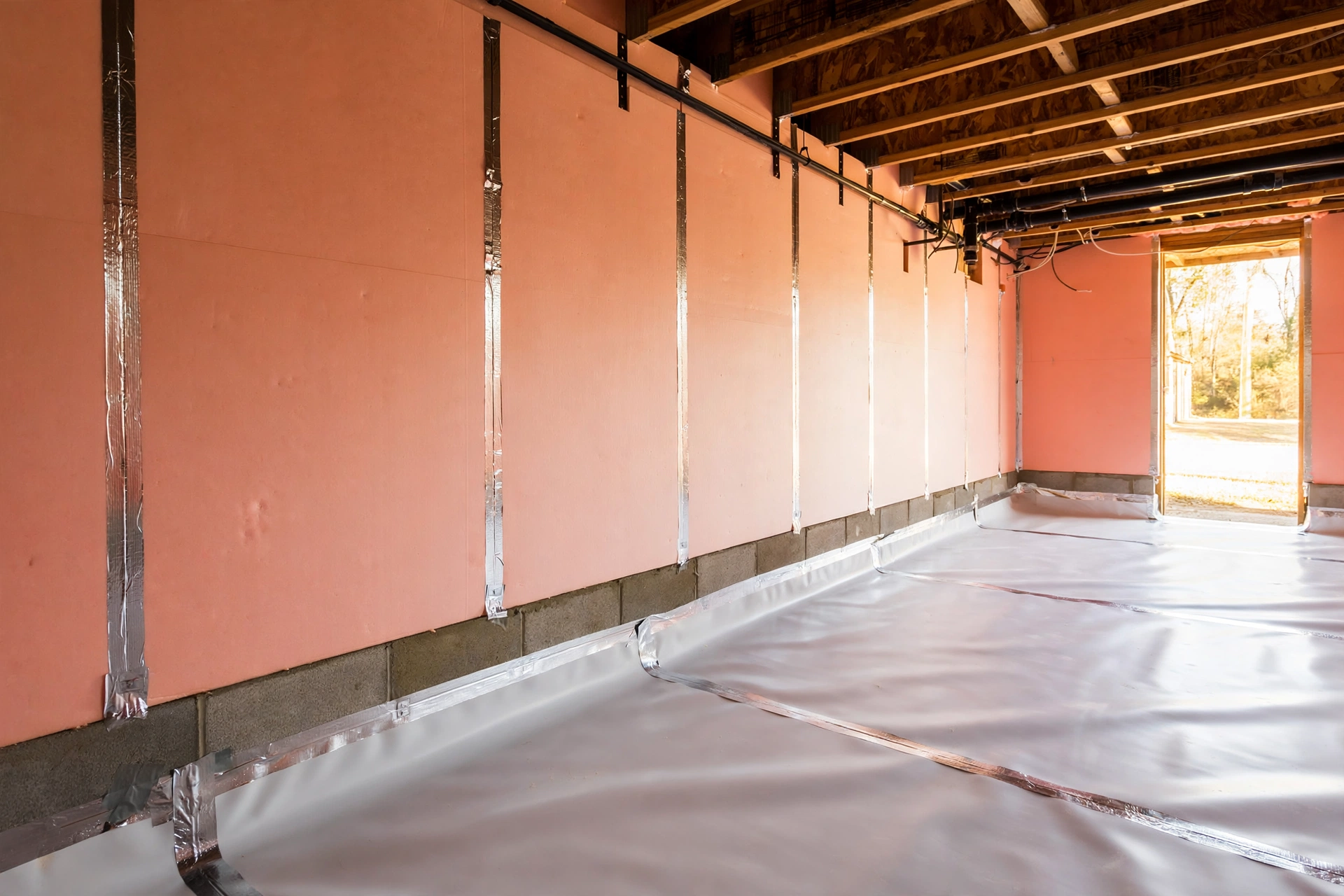
Sealed crawl space: insulate the foundation walls. Vented crawl space: insulate the floor above (between the joists). Mixing them up — wall insulation in a vented space, or floor insulation in a sealed one — creates moisture problems. The rule follows the thermal boundary: insulate wherever the conditioned space meets the unconditioned space.
This is the concept that unlocks everything else, so let's make it concrete:
In a sealed (encapsulated) crawl space, the space itself becomes semi-conditioned — it's inside the building envelope. The thermal boundary moves to the foundation walls. So we install rigid foam board (typically 2-inch XPS or polyiso, R-10 to R-13) directly on the interior foundation walls, sealed at seams. The floor above needs no insulation because there's no temperature difference across it anymore — the crawl space and the living room are on the same side of the thermal boundary.
In a vented crawl space, the space is effectively outdoors — cold in winter, hot and humid in summer. The thermal boundary is the floor above. Insulation goes between the floor joists (batt or spray foam), with the vapor retarder facing the right direction for our climate. Wall insulation here would be pointless — you'd be insulating walls around what is essentially outside air.
The expensive mistake: insulating the floor and sealing the space, or insulating walls while leaving vents open. Both create assemblies that trap moisture where it can't dry. When we insulate as part of an encapsulation, it's always walls — and the floor insulation, if present from the vented era, comes out, because saturated old batt insulation is a mold farm, not an asset.
Every crawl space we work on gets a thorough assessment first. We document moisture levels, structural condition, and drainage patterns before recommending a solution — so you get what your home actually needs, not a one-size-fits-all package.
How does crawl space insulation affect my HVAC and ducts?
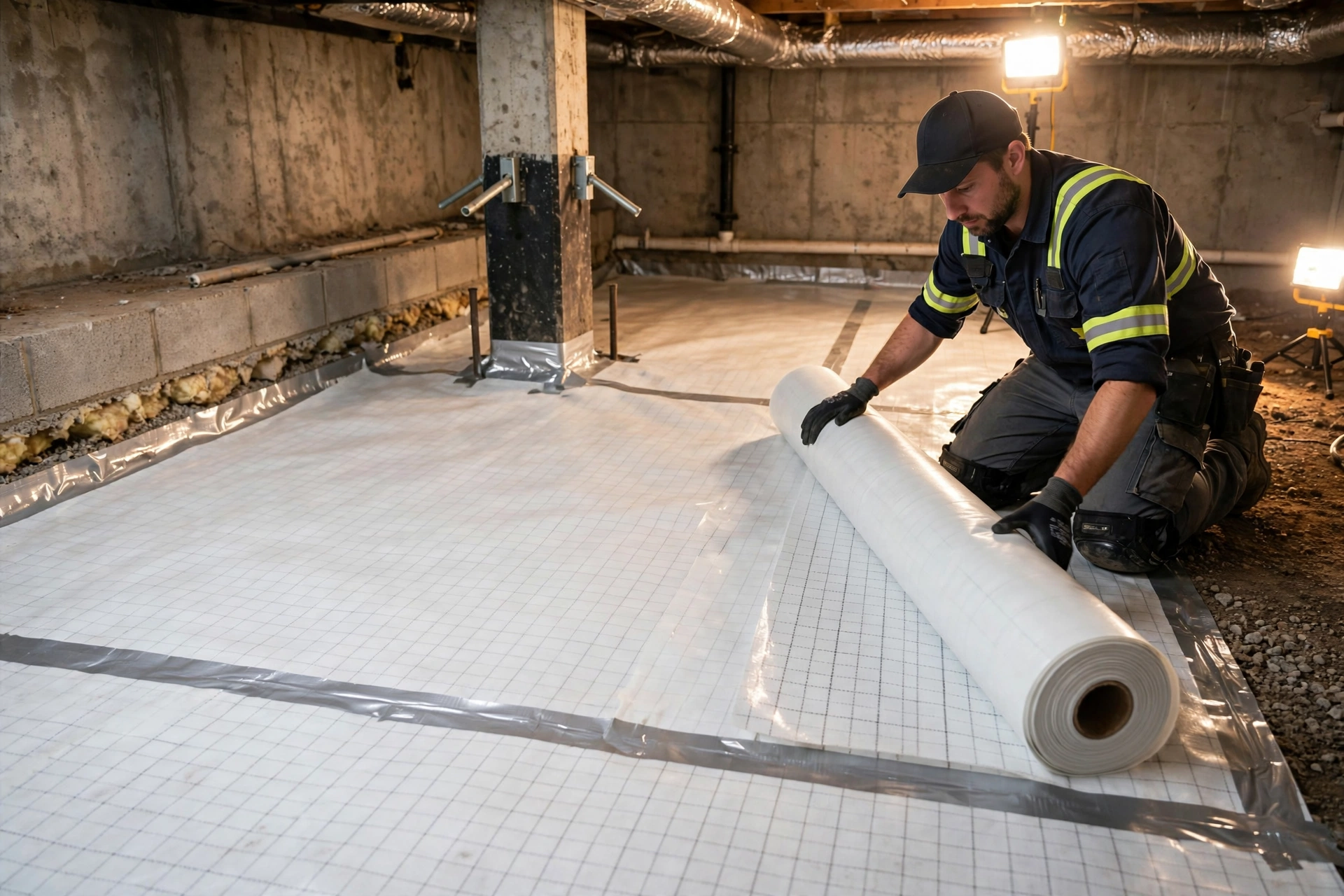
More than the insulation itself does. In most Hoover homes, the ductwork runs through the crawl space — and in a vented space, those ducts are trying to deliver 55°F air through a 95°F humid oven in summer and 75°F air through a 40°F space in winter. Sealing and insulating the space around the ducts often saves more energy than the wall insulation alone.
Here's what happens to ducts in a vented Hoover crawl space every August: cold supply air flows through metal ducts surrounded by hot, humid air. The duct surface drops below the dew point. Condensation forms — sometimes enough to drip. That moisture feeds mold on the duct exterior, degrades duct insulation, and in bad cases drips onto the vapor barrier or soil below. Meanwhile, the system works overtime because it's losing cooling to the crawl space before the air ever reaches your rooms.
Once the space is sealed and the walls are insulated, the ducts live in a 75°F, 50%-humidity environment instead of a 95°F swamp. No condensation. Minimal thermal loss. Your HVAC finally delivers what it's rated to deliver. Homeowners consistently tell us this is the change they feel — rooms that never cooled properly suddenly do, and the system cycles less.
We also inspect duct connections during insulation work. Leaky duct joints in a sealed crawl space still waste energy — just into a nicer space. Sealing major duct leaks while we're down there is cheap and effective, and we'll flag what we find.
How much can I actually save on energy bills?
Research and field data consistently show ~15–18% HVAC energy savings from a sealed, insulated crawl space versus a vented one — higher in homes with extensive ductwork below. On a typical Hoover home spending $200–$300/month on heating and cooling, that's $30–$55/month back in your pocket.
Let's be honest about the math, because insulation ROI gets oversold:
- The savings are real but not the reason to do it. At $40/month average savings, wall insulation alone ($1,500–$4,500 as a standalone) pays back in 3–9 years. That's solid — but nobody encapsulates for the energy savings. You do it to stop mold, protect framing, and fix air quality. The energy savings are the bonus that keeps paying.
- Ducts drive the number. Homes with all ductwork in the crawl space see the high end of savings; homes with attic ducts or ductless systems see less. We'll tell you which camp you're in during the inspection.
- Comfort is the immediate win. Before the payback math even matters, most homeowners notice: fewer hot/cold rooms, less HVAC runtime noise, floors that don't feel cold in winter. Those show up on day one.
One more honest note: if someone quotes you insulation savings of 30–40%, ask for the study. The credible research clusters around 15–18% for the full sealed-and-insulated assembly. Bigger claims usually come from someone selling something.
Does crawl space insulation need to meet code?
Yes — and the requirements are specific. The IRC requires foundation wall insulation in sealed crawl spaces to meet local R-value minimums (R-10 continuous in our climate zone is the common target), exposed foam must be covered with a thermal barrier or use fire-rated product, and the insulation can't interfere with termite inspection gaps.
Code details that separate professional work from shortcuts:
- Thermal barrier: exposed foam plastic insulation generally needs a 15-minute thermal barrier (like drywall) or must be a specifically fire-rated product. We use code-compliant materials and methods — this is a life-safety item, not a technicality.
- Termite gap: same 3-inch inspection gap at the top of the wall that applies to vapor barriers applies here. Insulation run tight to the sill plate blocks WDO inspection and can violate the code's termite provisions.
- R-value: we install to meet or exceed the IRC prescription for Climate Zone 3. The quote specifies the product and R-value — if a competitor's quote just says "insulation," ask what R-value and what product.
What Does Crawl Space Insulation Cost in Hoover?
Professional crawl space insulation in the Hoover area typically runs $1,500–$4,500:
| Insulation scope | Typical range |
|---|---|
| Rigid foam on foundation walls (sealed space), average home | $1,500 – $3,000 |
| Wall insulation + rim/band joist sealing | $2,500 – $4,000 |
| Floor batt replacement (vented space) | $1,500 – $3,500 |
| Spray foam (walls or rim joist), premium option | $3,000 – $4,500+ |
What drives it: linear feet of foundation wall, foam thickness and R-value, whether rim joists get sealed (they should — it's the leakiest square footage in the house), and removal of old failed insulation. As part of a full encapsulation, wall insulation is typically 15–25% of the total project cost — and it's the component with the most direct payback.
Common Questions About Crawl Space Insulation
Can I just add more insulation to my vented crawl space?
You can, but check what's already there first. In many Hoover vented crawl spaces, the existing floor-batt insulation is saturated, fallen, or moldy — adding new batts over that traps the problem. Often the right move is removal, moisture assessment, then fresh insulation.
And be honest about whether the vented assembly is serving you at all. If you're fighting humidity, mold, and high bills with a vented space, more floor insulation is treating a symptom. The sealed-and-insulated-walls approach addresses the cause — and it's worth pricing both before deciding.
Is spray foam better than rigid foam board for crawl space walls?
Spray foam (closed-cell) gives higher R-value per inch and air-seals simultaneously — it's technically superior. Rigid foam board costs significantly less and performs very well when seams are taped and sealed. For most Hoover homes, rigid board is the value choice; spray foam is the premium one.
We install both and quote both when asked. The performance gap is real but modest in our climate; the price gap is not. Don't let anyone tell you rigid board "doesn't work" — properly installed, it's excellent.
Will insulating my crawl space make my floors warmer in winter?
Yes — noticeably. Cold floors in winter are the #1 comfort complaint we hear, and they're caused by cold air in the vented space below. A sealed, insulated crawl space typically runs 15–25°F warmer than a vented one in January.
Tile and hardwood floors show the biggest improvement; carpeted floors less so (the carpet was already insulating you from the problem). If cold floors are your main complaint, the sealed-wall approach fixes it at the source rather than masking it.
Do I need to remove old insulation before encapsulating?
Almost always yes. Old floor-batt insulation in a space being sealed has to come out — it's in the wrong location for the new thermal boundary, and it's usually moisture-damaged anyway. We include removal in every encapsulation quote.
The only exception: relatively new, clean, dry batts in a space that's staying vented. But if we're sealing the space, the old floor insulation comes down and wall insulation goes up. Leaving it creates a double vapor retarder situation that traps moisture — exactly what we're trying to eliminate.
What R-value does Hoover require for crawl space walls?
Hoover is in IECC Climate Zone 3, where the IRC prescribes R-10 continuous insulation on foundation walls for sealed crawl spaces. We typically install 2-inch XPS (R-10) or 2-inch polyiso (R-13) — meeting or exceeding the requirement.
The quote will specify the product and R-value in writing. "Insulation included" without a specified R-value is a quote you can't compare — always ask.
Fix the Comfort, Cut the Bills
Our free inspection evaluates your thermal boundary, your ducts, and your existing insulation — and tells you whether insulation alone, or the full sealed approach, is the honest answer.
- Existing insulation condition documented
- Duct inspection included
- R-value and product specified in writing
- Energy savings estimated honestly for your home
Prefer to talk? (205) 208-7286