Crawl Space Encapsulation in Homewood, AL
Homewood's 1940s–1970s bungalows and cottages are some of the metro's most loved starter homes — and some of its most moisture-prone. Small crawl spaces, original vented designs, and decades of deferred upkeep add up. We make encapsulation affordable and straightforward for Homewood budgets.
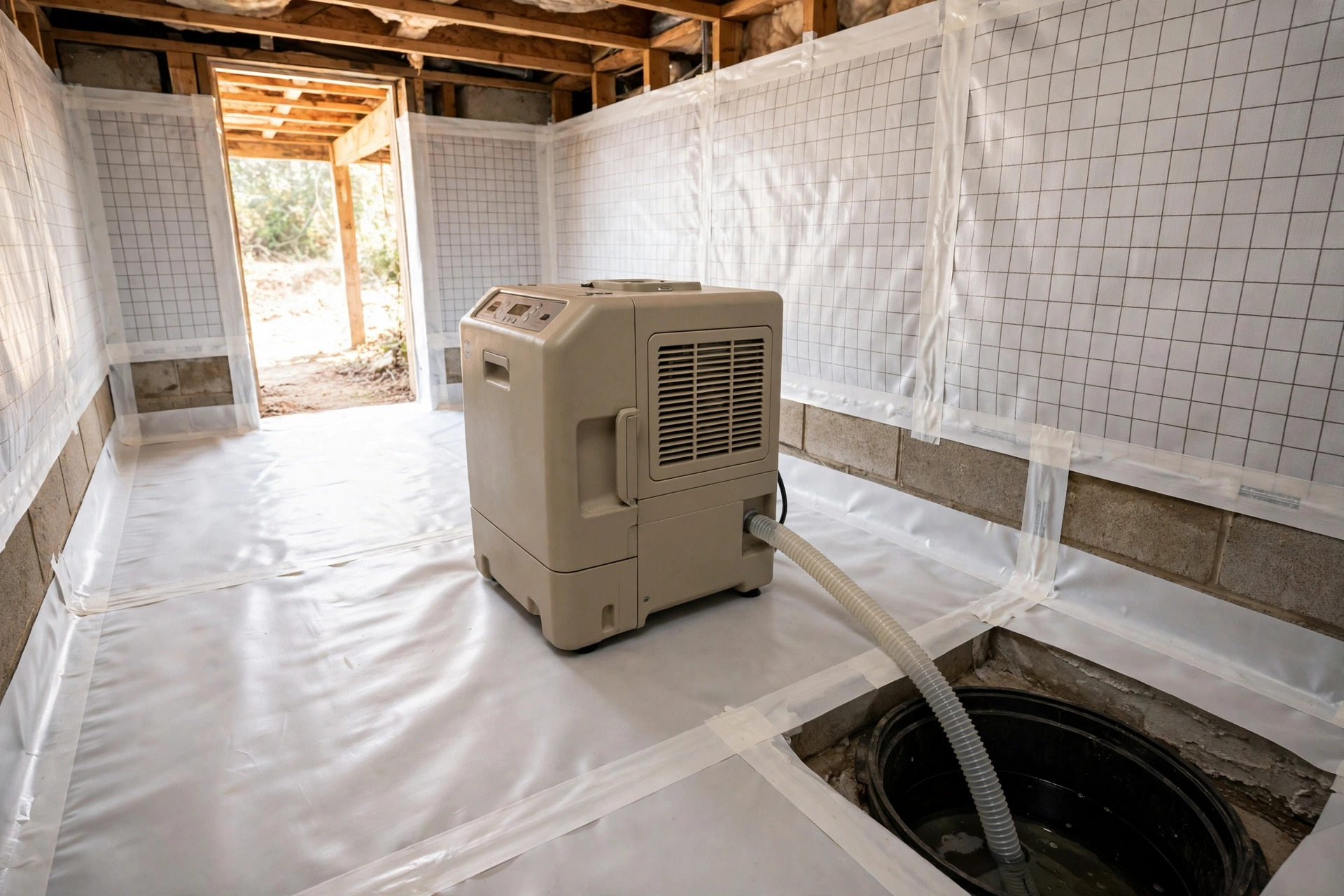
The Starter Home With a Moisture Problem
Homewood is where the Birmingham metro's character lives — Hollywood, Edgewood, Rosedale, the neighborhoods of brick cottages and bungalows that drew young families for generations. The homes went up mostly between the 1940s and 1970s: modest footprints, crawl space foundations, and construction that was solid for its era but never designed for what Alabama humidity does over 60 years.
The pattern we see in Homewood is consistent: small crawl spaces (often 800–1,200 square feet) with original everything. Original vents, long since rusted open. Whatever vapor barrier was installed — often nothing, sometimes a thin sheet that's now confetti — doing nothing. Floor framing that's absorbed six decades of summer humidity. And homeowners who bought the house for the neighborhood and the price, then discovered the musty smell that comes with the territory.
Small spaces, concentrated problems
Here's what makes Homewood crawl spaces tricky despite their size: there's less air volume, so moisture concentrates faster. A small vented crawl space in July can hit 80%+ relative humidity and stay there — the perfect incubator for mold on joists and subfloor. The good news is that small spaces also cost less to fix. Less liner, less labor, smaller dehumidifier. Homewood encapsulations are among the most affordable we do, which matters when the homeowner is already stretching to own in this market.
The affordability equation
We talk straight about money in Homewood because our customers do. A young family that just bought a 1950s Edgewood cottage doesn't have $15,000 sitting around for a crawl space — and in most cases, they don't need to spend that. The smaller footprint keeps full systems in the $4,500–$8,000 range for typical conditions. And we phase honestly: if the budget only covers drainage and barrier this year with the dehumidifier next year, we'll scope it that way rather than pressure you into everything at once. A phased plan executed well beats a full system financed badly.
Questions Homewood Homeowners Ask Us
We just bought a 1950s bungalow and the inspector flagged moisture. How urgent is this?
It depends on the readings, not the flag. "Elevated moisture" on an inspection report ranges from "monitor it" to "fix it this year" — our free inspection tells you which one you're dealing with.
Here's how to think about it: surface staining with moisture readings under 20% is a watch-and-plan situation. Readings over 20% with active mold means the clock is running — every humid summer degrades the framing further. We measure it, photograph it, and give you a straight timeline. No scare tactics; plenty of Homewood inspection flags turn out to be manageable.
Can we do this in phases to spread out the cost?
Yes — and we'll help you sequence it right. The order matters: drainage and mold remediation first, then barrier and sealing, then dehumidifier. Done in that order, phasing works fine.
What doesn't work is phasing backward — sealing before drainage, or skipping remediation to save money. We'll give you the full scope itemized, then mark the phases so you can do phase one now and phase two when the budget allows. The system is designed to be completed in stages without redoing work.
Our crawl space is tiny and hard to access. Is that a problem?
It's common in Homewood's older cottages, and we work in tight spaces routinely — but very low clearances or tiny access hatches can add labor time, which we'll quote upfront.
Some 1940s–50s bungalows have clearances under 18 inches in spots. We have low-profile equipment for exactly this, and if the access hatch needs enlarging, that's a standard line item — not a surprise change order. During the free inspection we measure clearances and access, so the quote reflects the real working conditions.
Will encapsulation actually lower our energy bills?
Yes — typically around 15% on heating and cooling, because your HVAC stops fighting the humidity rising from the crawl space. On a small Homewood home, that's real monthly money.
The mechanism is simple: your ductwork likely runs through the crawl space, and right now it's sitting in hot humid air all summer. Sealed and dehumidified, the ducts stay cooler, the system cycles less, and the upstairs stays more comfortable. It's not the reason to encapsulate — moisture protection is — but it's the rebate that keeps paying.
What Encapsulation Costs in Homewood
Homewood jobs typically land between $4,500–$12,000 — the most affordable range we quote, thanks to smaller footprints:
| Factor | How it affects Homewood pricing |
|---|---|
| Smaller footprint | 800–1,200 sq ft is typical — less liner, less labor, smaller dehumidifier than the metro average |
| Phasing options | Drainage + barrier now, dehumidifier later is a legitimate sequence we scope honestly |
| Access constraints | Tight clearances on 1940s–50s builds can add labor — measured at inspection, quoted upfront |
A typical 1950s bungalow in average condition often lands $5,500–$8,000 for the full system; one needing mold remediation plus drainage can reach $9,000–$12,000. What goes into a Homewood quote — full breakdown.
What to Expect on a Homewood Job
Homewood jobs are compact and efficient: cleanout of whatever the decades left behind, mold treatment where the readings call for it, then the full seal — 20-mil floor barrier fitted to the smaller footprint, 12-mil walls, sealed vents, and a right-sized dehumidifier (smaller spaces need smaller units, which cost less). Most Homewood systems finish in 2–3 days. If we're phasing, phase one is drainage and remediation with the space prepped so phase two drops in without rework.
- Right-sized system — no overselling on small footprints
- Phased plans sequenced correctly when budget requires
- Tight-space equipment for low-clearance cottages
- 2–3 day typical timeline, minimal disruption
Homewood Encapsulation FAQs
Is encapsulation worth it on a smaller, older home?
Usually yes — and the math is kindest on smaller homes, because the system costs less while protecting the same essential structure: your floors, framing, and indoor air.
The question isn't the home's size or age; it's the moisture readings. If the crawl space is wet and growing mold, the framing is degrading regardless of the home's market value. A $6,000 system protecting a $250,000 bungalow's structure is proportionally the same investment as a $12,000 system on a $500,000 house.
Do you offer any financing?
We don't offer in-house financing — but most of our Homewood customers use home equity lines, which currently offer the best terms for this kind of improvement.
We'll give you an itemized quote you can take to your bank, and we're happy to phase the work so the first phase fits your cash budget. What we won't do is mark up the job to cover financing fees — the price is the price.
Our home has an addition with a different foundation. Does that complicate things?
It's common in Homewood — original cottage plus a later addition — and we handle the transition between foundation types as part of the scope.
The addition might be on a slab while the original is crawl space, or two crawl spaces at different heights. We seal each section appropriately and detail the transition so there's no gap in the system. It gets its own line items in the quote, not a shrug.
How do we maintain the system after installation?
Very little: check the dehumidifier filter a few times a year, make sure the condensate drain stays clear, and let us do an annual checkup if you'd like one.
The barrier itself needs nothing. The dehumidifier is the only mechanical component — filter changes take five minutes and we'll show you how. We offer an annual inspection service, but there's no required maintenance contract and no fine print.
Get Your Free Homewood Inspection
Starter home or forever home — the crawl space doesn't care, but your floors do. We'll show you exactly what's down there and give you options that fit your budget.
- Photos and readings — the full honest picture
- Itemized quote with phasing options
- Right-sized scope, never oversold
- Straight timeline from inspection findings
Prefer to talk? (205) 208-7286