Crawl Space Encapsulation in Hoover, AL
Your Crawl Space Is Costing You Money Every Month
Excess moisture under your Hoover home feeds mold, rots wood, and forces your HVAC to work overtime. We seal it, dry it, and protect it — permanently.
Is Your Crawl Space Trying to Tell You Something?
Most Hoover homeowners never look under their house — until something forces the issue. A musty smell that won't go away. Floors that feel soft near the tub. An inspector's report with the words "elevated wood moisture." Answer five quick questions and find out where you stand.
The 60-Second Crawl Space Risk Check
What We Do
Every service below is something we do ourselves, in Hoover-area crawl spaces, every week. No middlemen, no subcontractor roulette.
Crawl Space Encapsulation
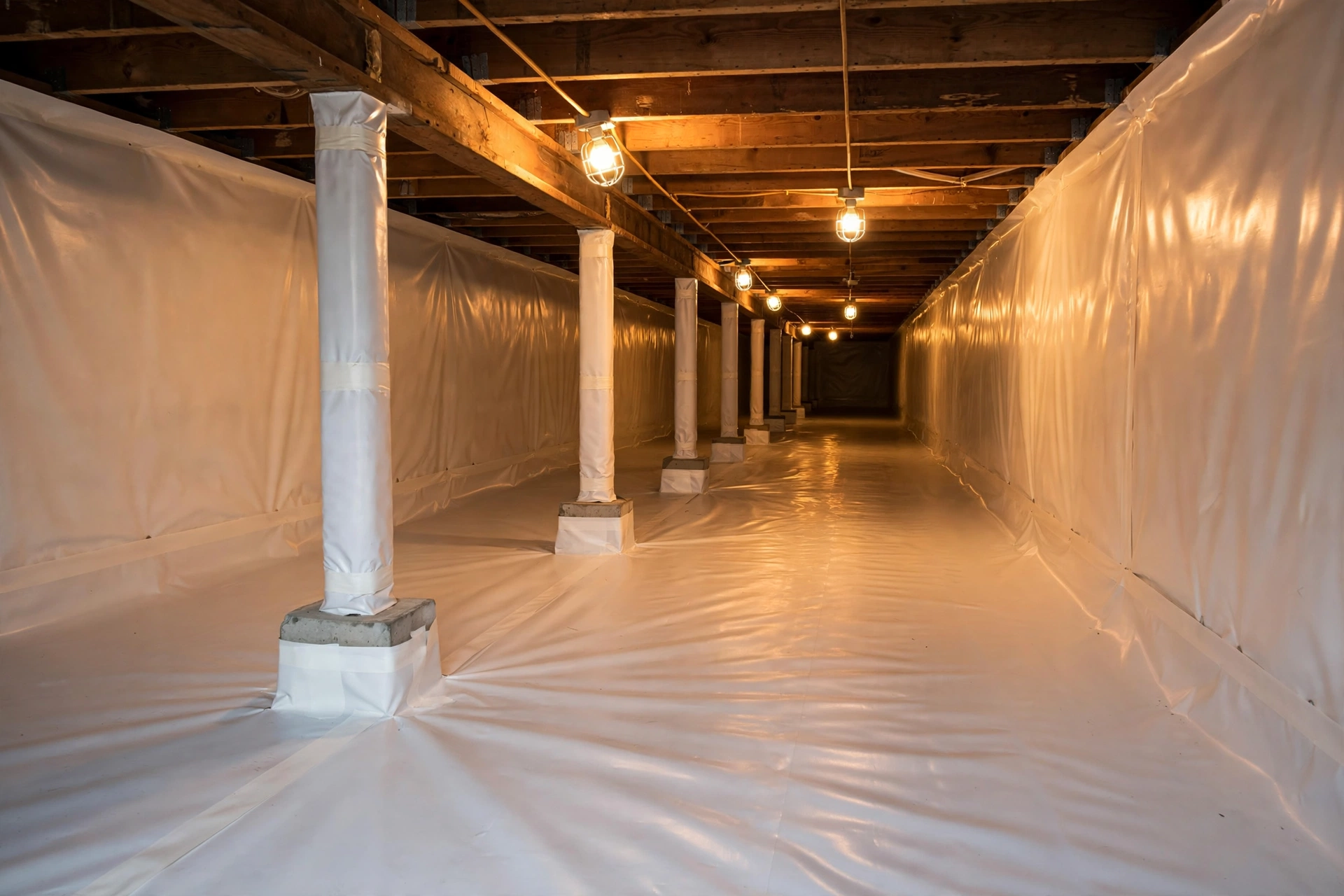
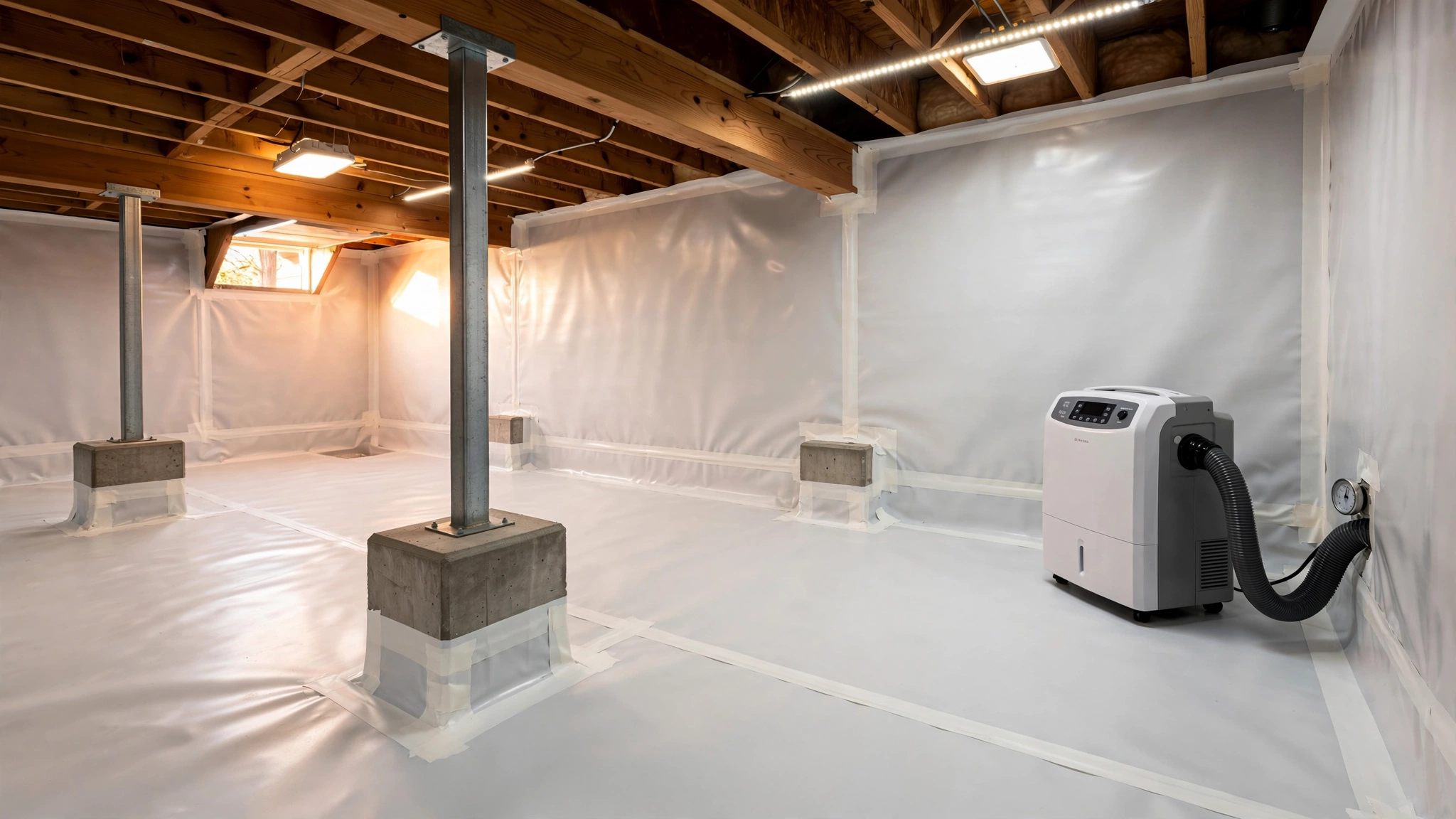
Our core service: sealed 20-mil vapor barriers, closed vents, wall insulation, and dehumidification. The full system that ends moisture problems for good.
Learn more →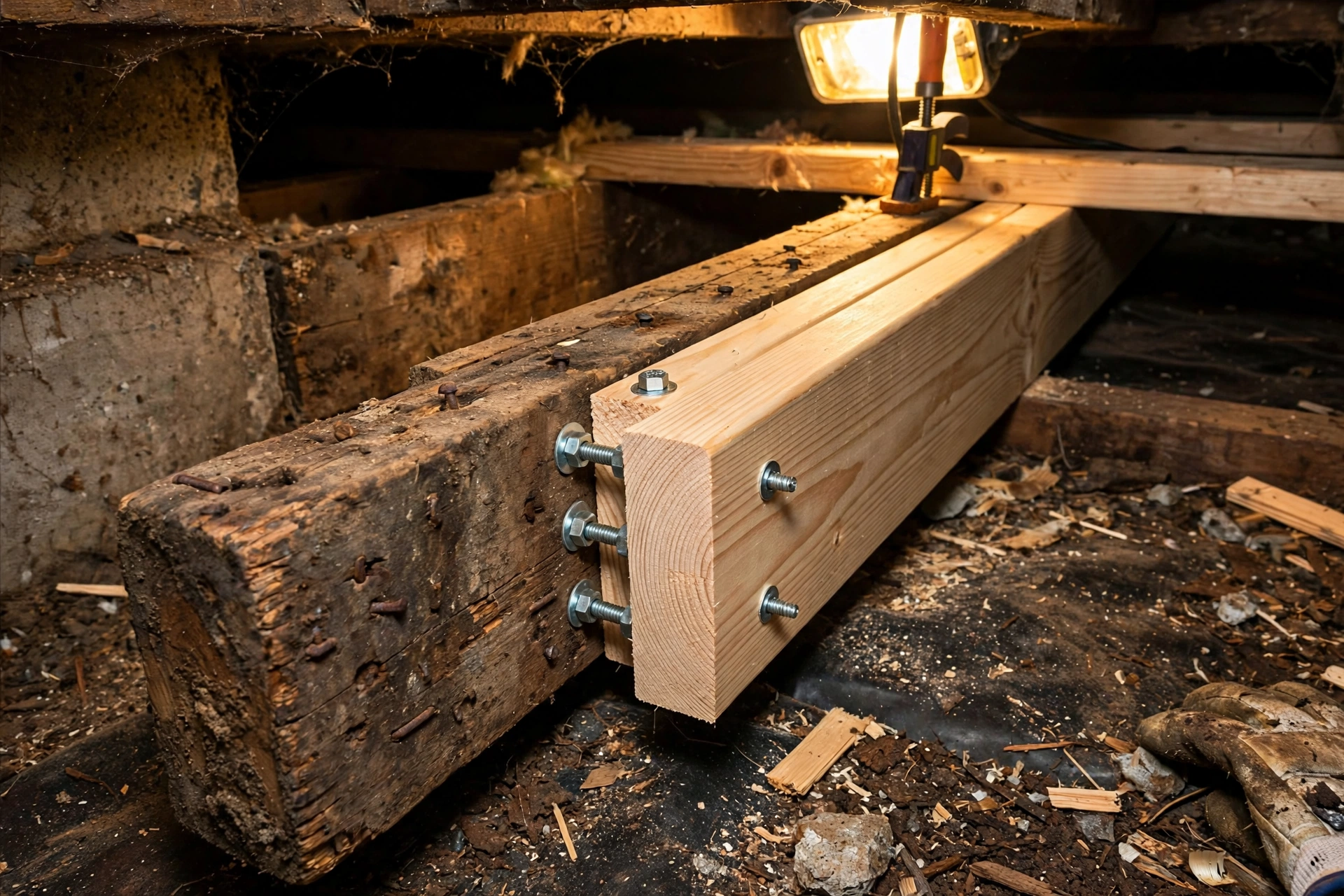
Crawl Space Repair
Sagging joists, rotted sills, damaged subfloor. Structural repairs done right — before anything gets sealed up.
Learn more →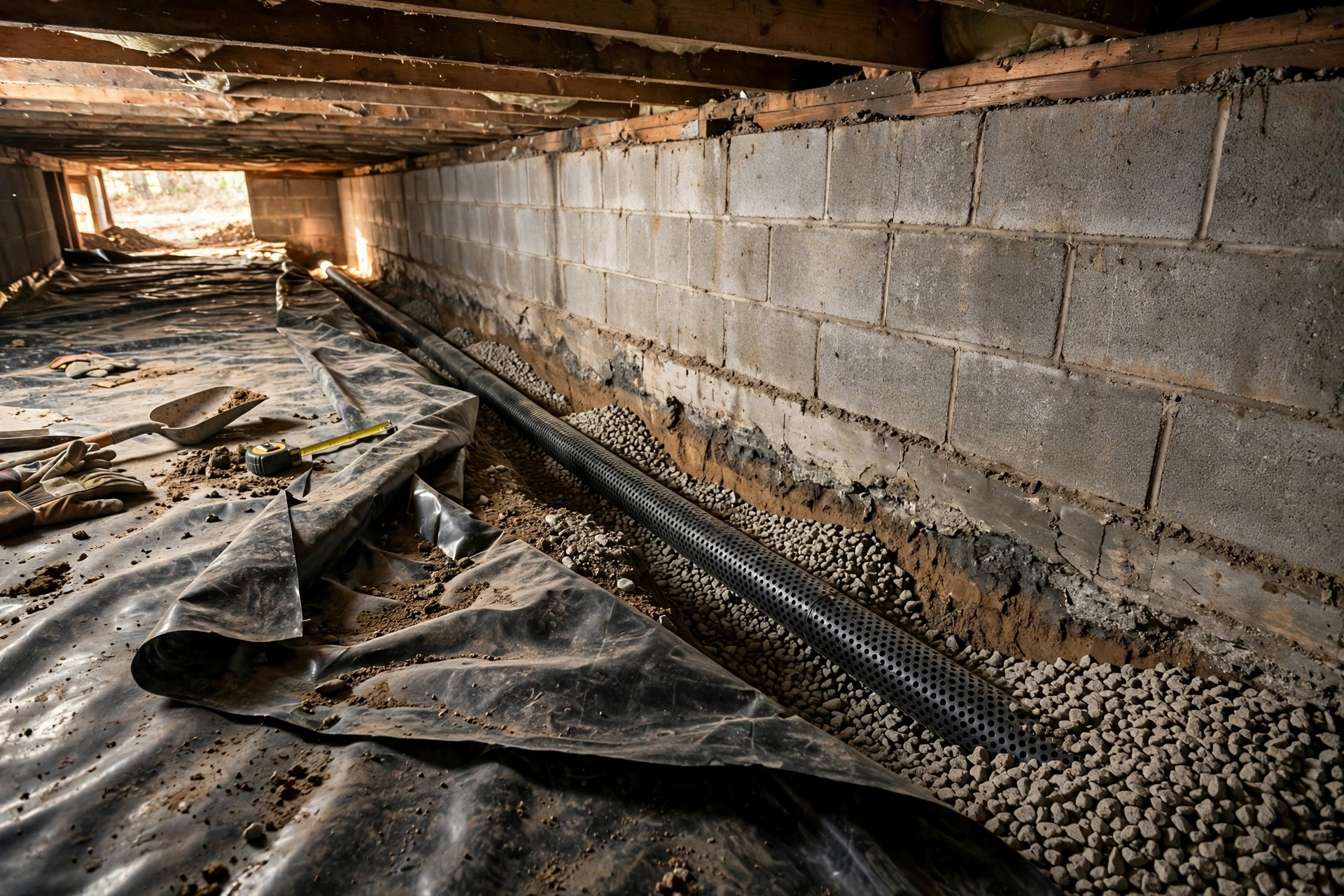
Crawl Space Waterproofing
Interior French drains, sump pumps, and grading. Our rule: drainage first, then seal. Never the other way around.
Learn more →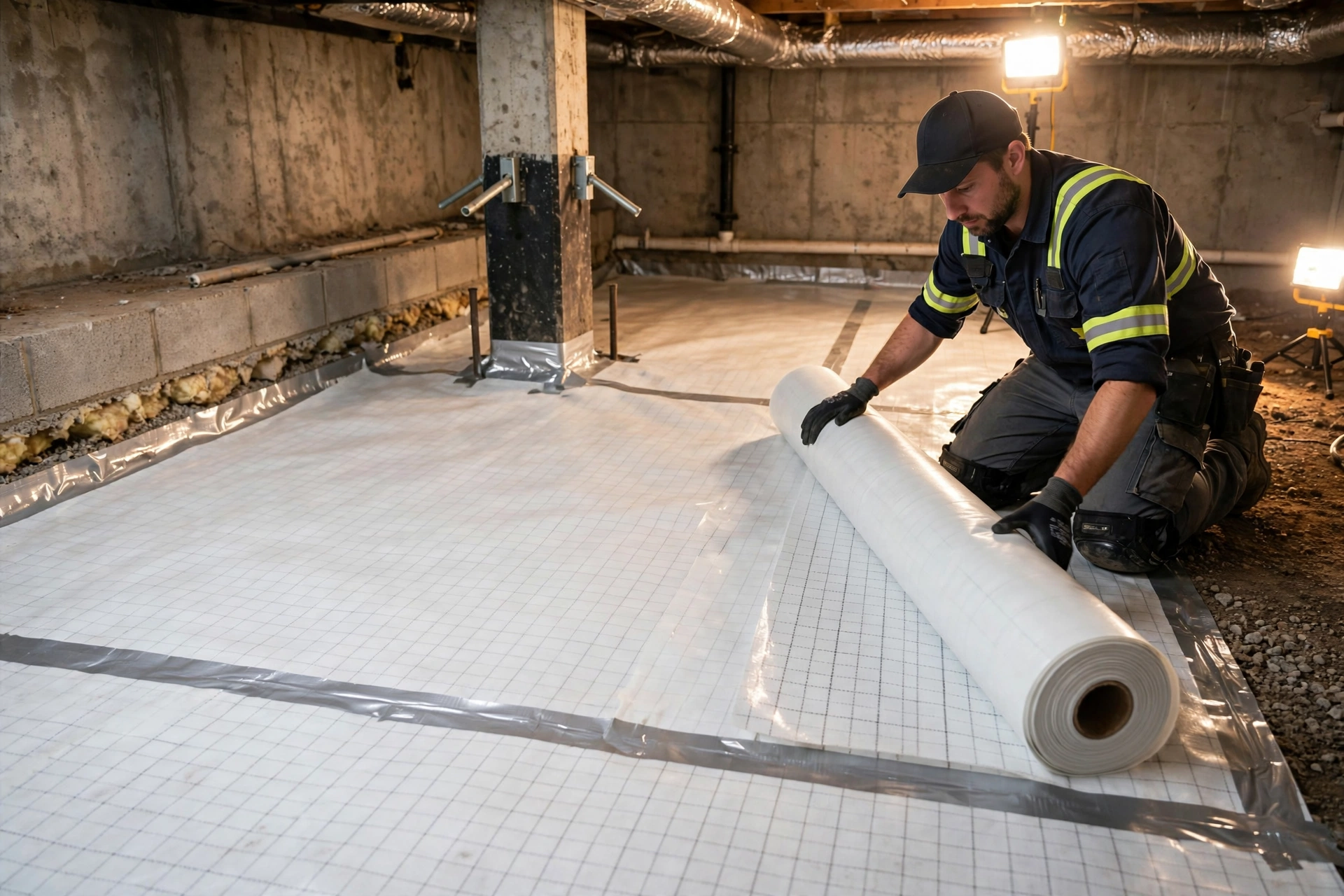
Vapor Barrier Installation
12–20 mil reinforced liners, properly overlapped and sealed. Honest guidance on when a barrier alone is enough.
Learn more →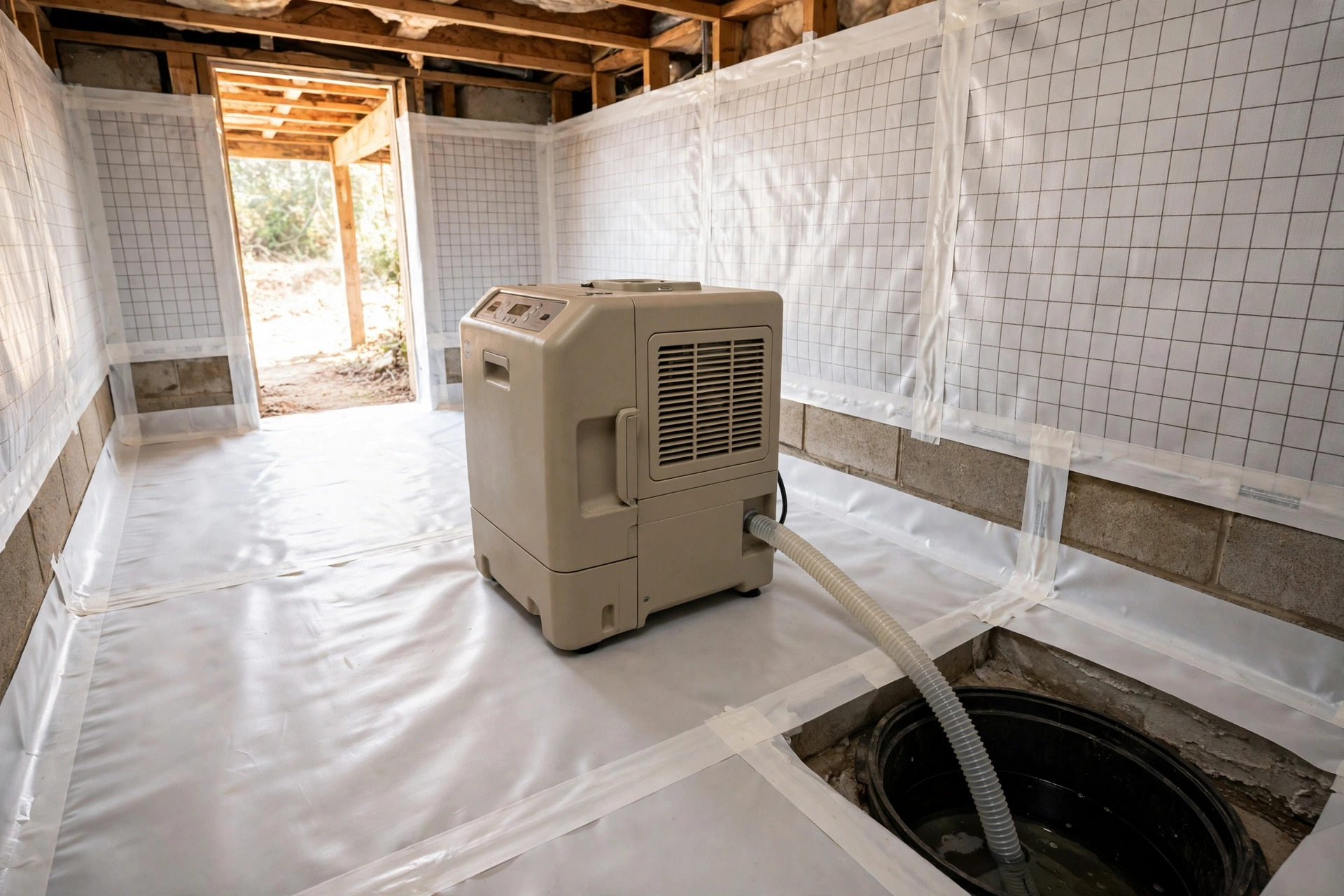
Dehumidifier Installation
Commercial-grade units sized for Alabama humidity, with proper condensate drainage. Keep it under 60% RH year-round.
Learn more →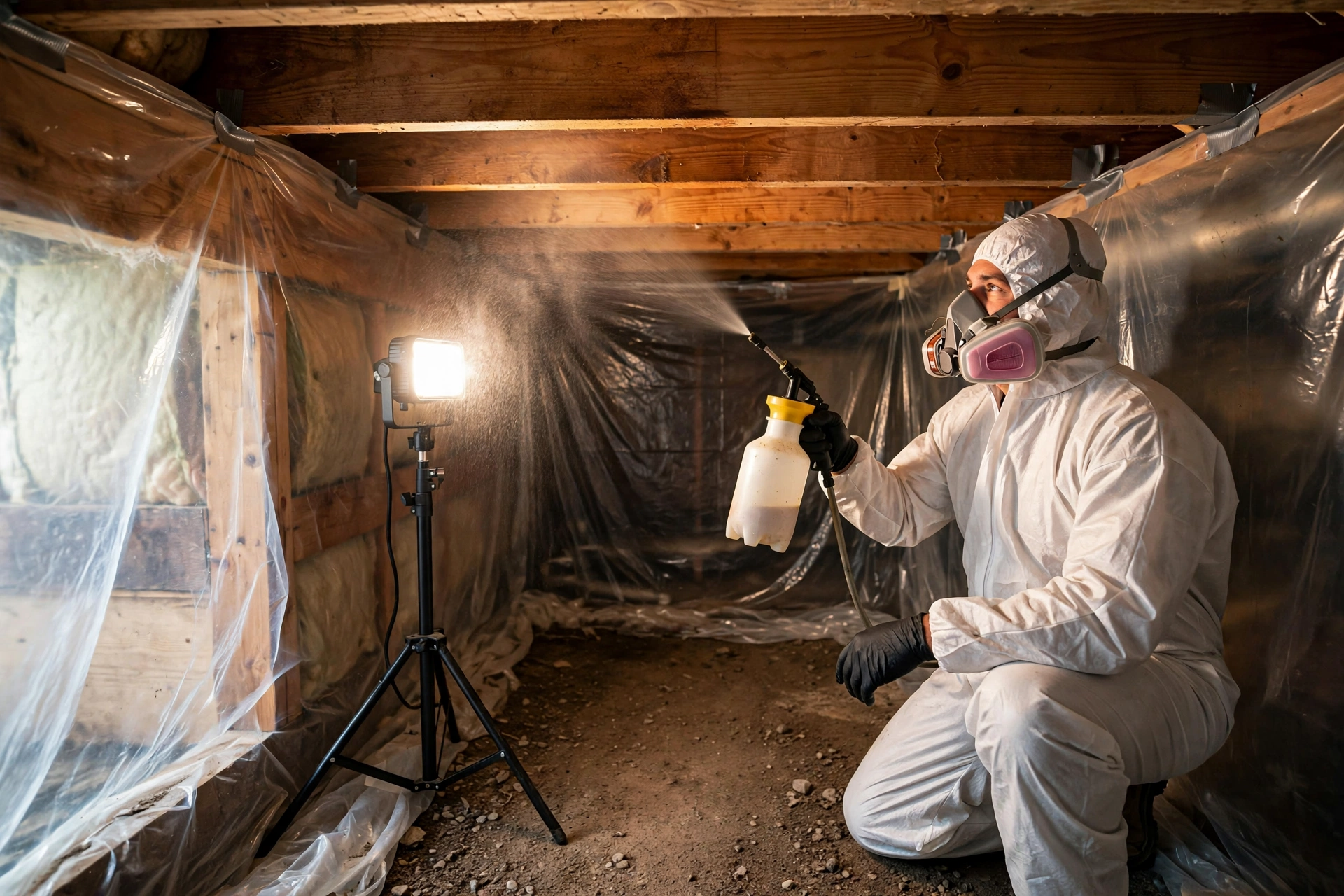
Mold Removal & Remediation
What your inspector found, explained plainly. Remediation, wood treatment, and fixing the moisture source so it doesn't come back.
Learn more →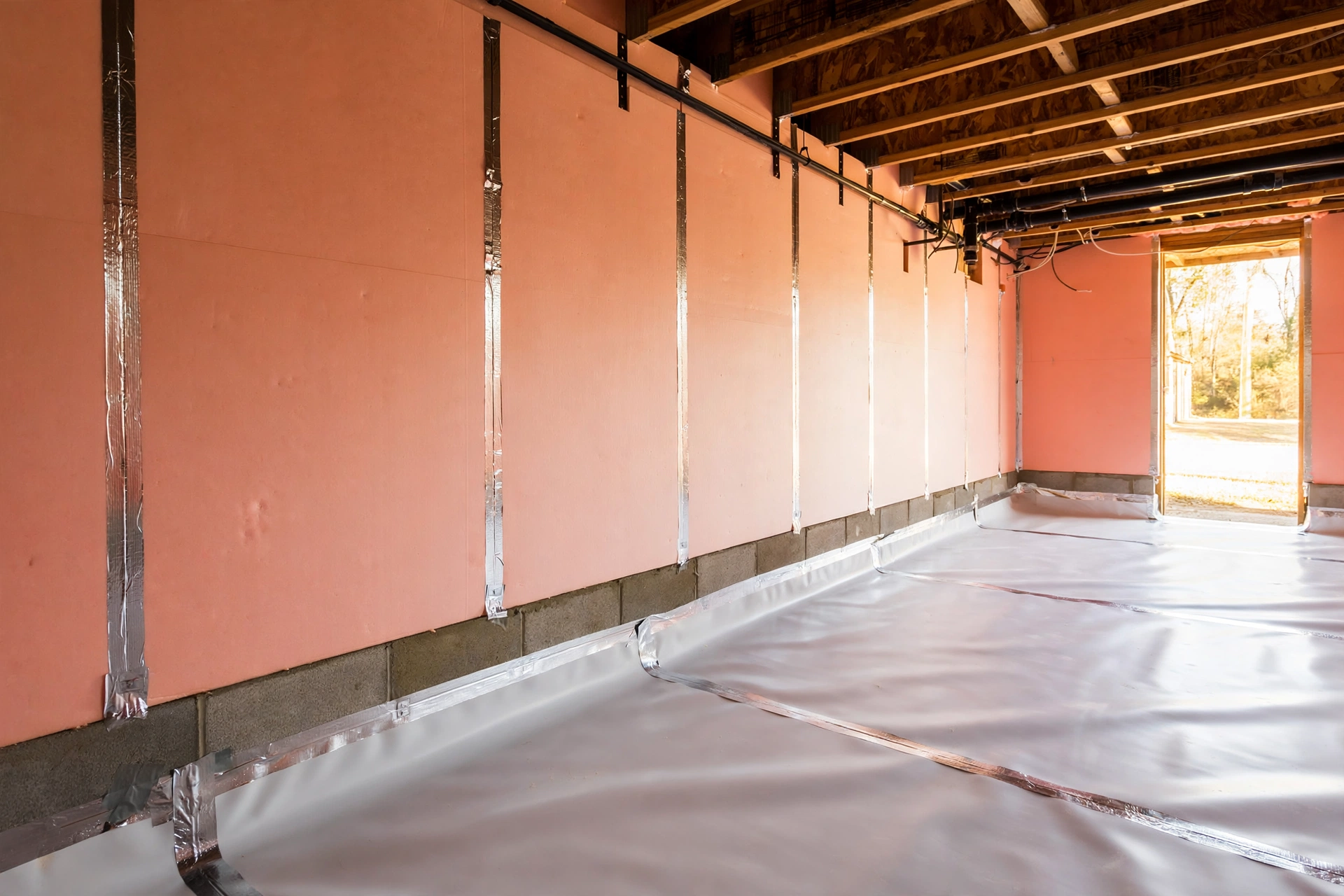
Crawl Space Insulation
Wall insulation for sealed crawl spaces, done to code. Stop paying to heat and cool the outdoors.
Learn more →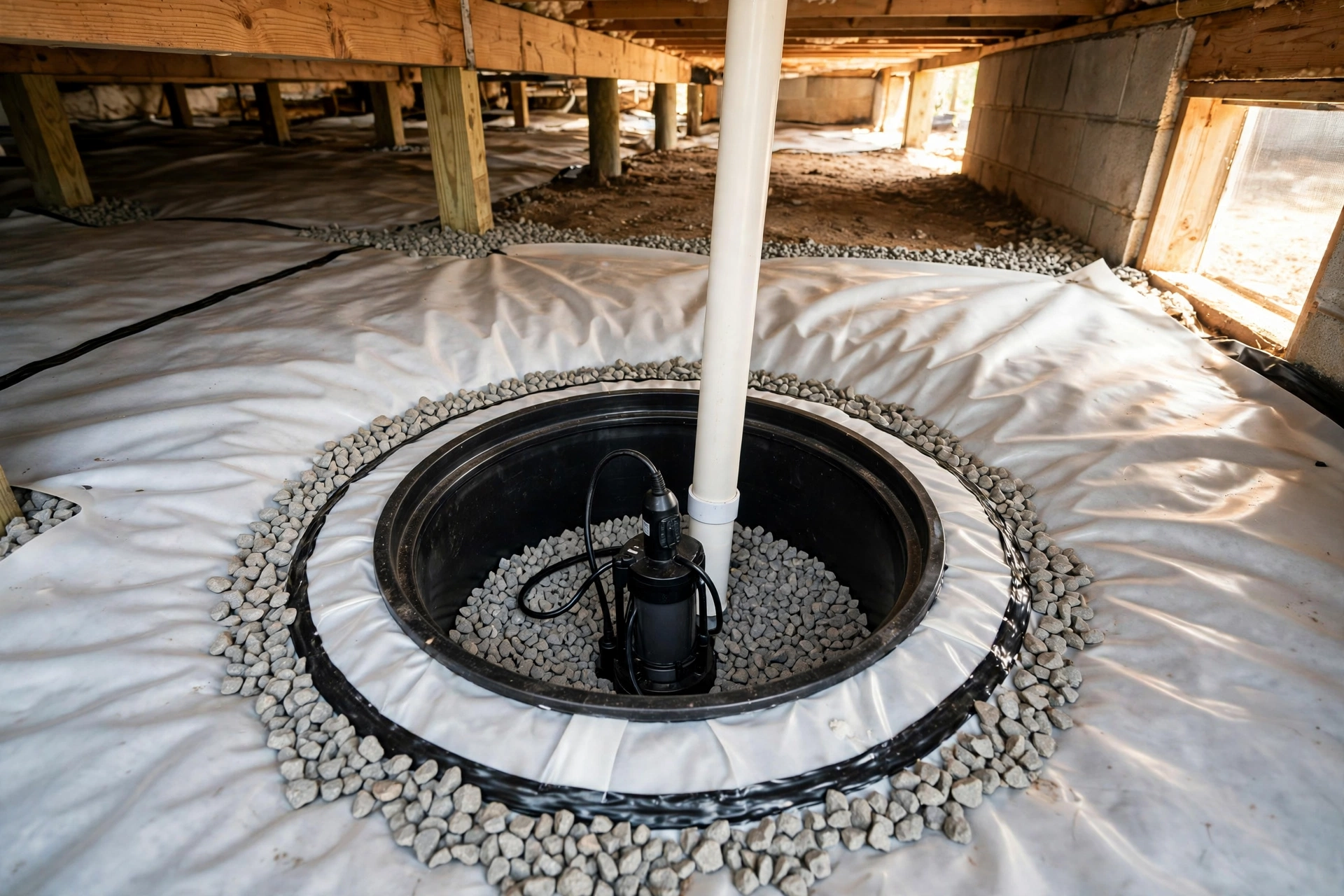
Drainage & Sump Pumps
French drains, sump basins, and exterior grading for Hoover's clay soil and hydrostatic pressure.
Learn more →Why Hoover Crawl Spaces Fail
It's not bad luck. It's geology and climate, and every home in Hoover sits on top of both.
Red clay that moves
Shelby County sits on expansive red clay. When it rains, the clay swells and pushes water against your foundation walls — that's hydrostatic pressure. When it dries, the clay shrinks and pulls away, leaving gaps where water collects next time. This swell-shrink cycle never stops, and it's hardest on homes in Greystone and along the Cahaba River watershed.
Humidity that never really leaves
Hoover averages 70%+ relative humidity through the summer. A vented crawl space breathes that humid air all day long. Warm humid air hits cooler surfaces under your house — ducts, pipes, joists — and condenses. That's not a leak. That's physics, and it happens in every vented crawl space in central Alabama.
Builder membranes with an expiration date
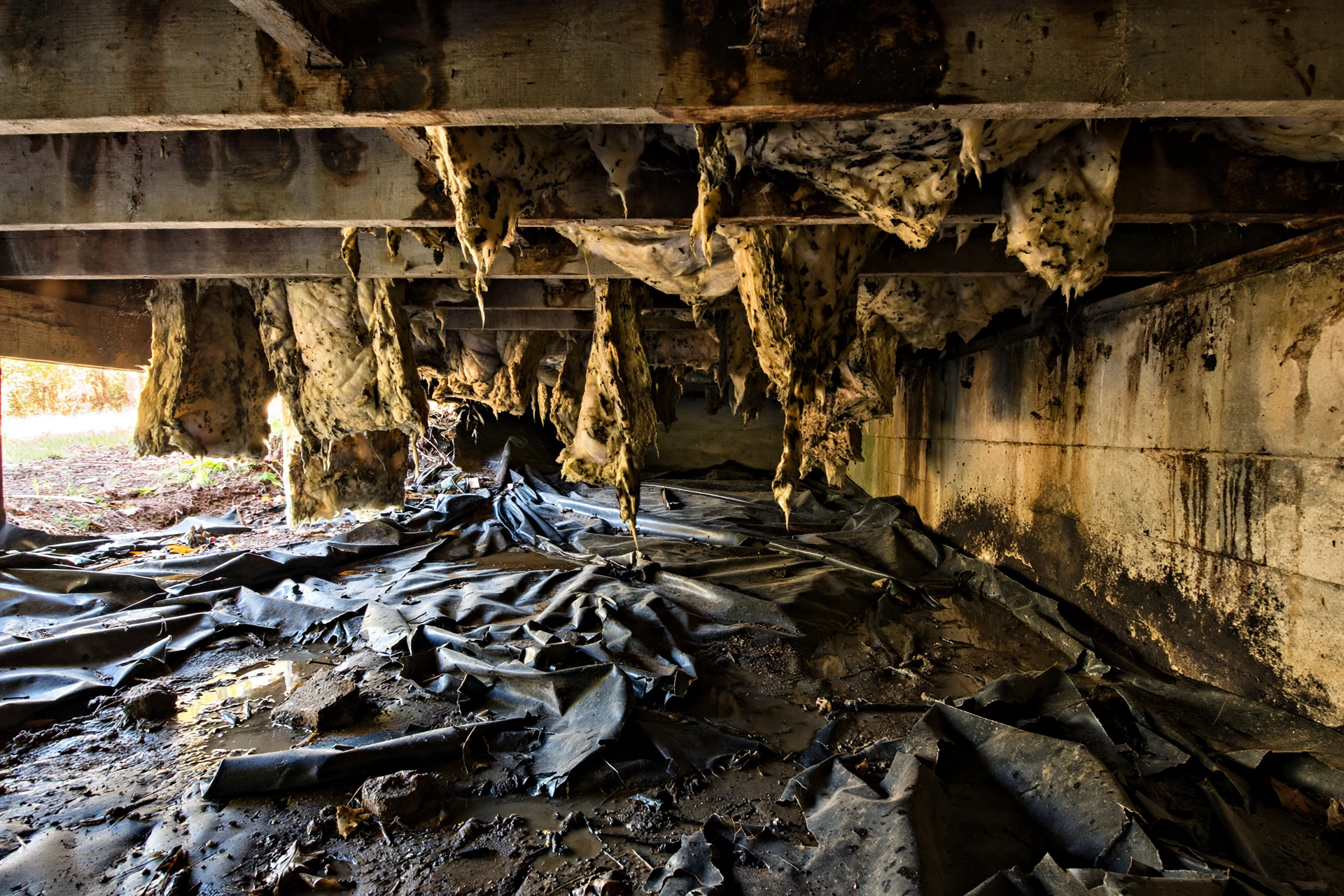
Homes built in Ross Bridge, Greystone, and Trace Crossings in the 2000s came with builder-grade 6-mil vapor barriers. Those membranes degrade in 10–15 years. If your home was built between 2000 and 2010, the plastic under your house is likely torn, displaced, or gone — and the clock has been ticking.
What Does It Cost? Estimate Yours.
Every crawl space is different, but most full encapsulation systems in the Hoover area land between $5,000 and $15,000. Use the estimator for a ballpark based on your home — then read the full cost breakdown to understand what drives the number.
Encapsulation Cost Estimator
How Encapsulation Works
No mystery, no magic. Here's exactly what happens when we encapsulate a Hoover crawl space:
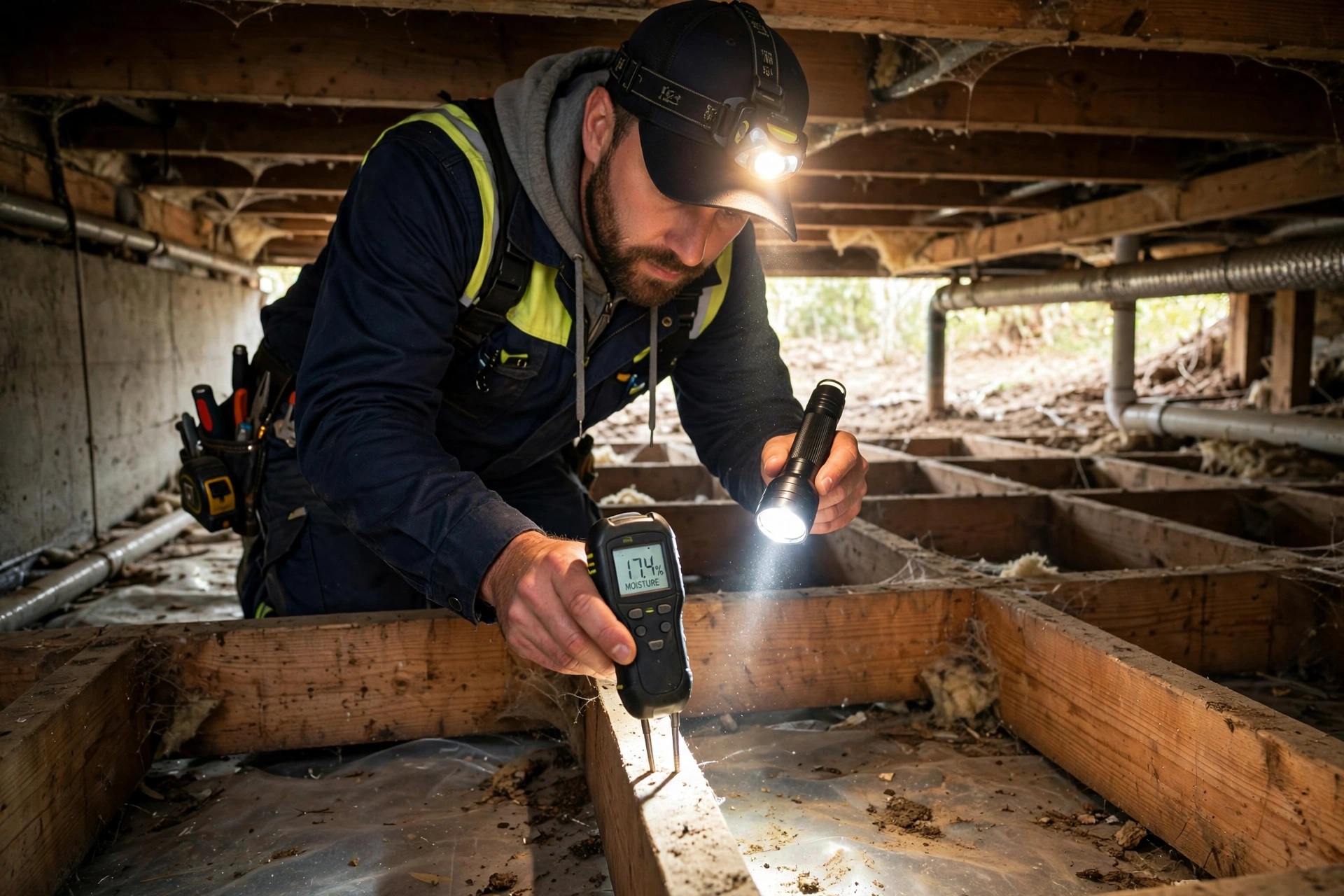
Inspection & moisture mapping
We crawl the whole space, photograph everything, and take wood-moisture readings. You get the photos and the numbers — not a sales pitch.
Drainage first (if needed)
Standing water or active intrusion? Interior French drain and sump pump go in before anything gets sealed. Sealing over water just covers a puddle.
Cleanout & mold treatment
Debris out, old failed barrier out. Any mold gets remediated and wood gets treated. We don't seal mold inside — ever.
Seal the envelope
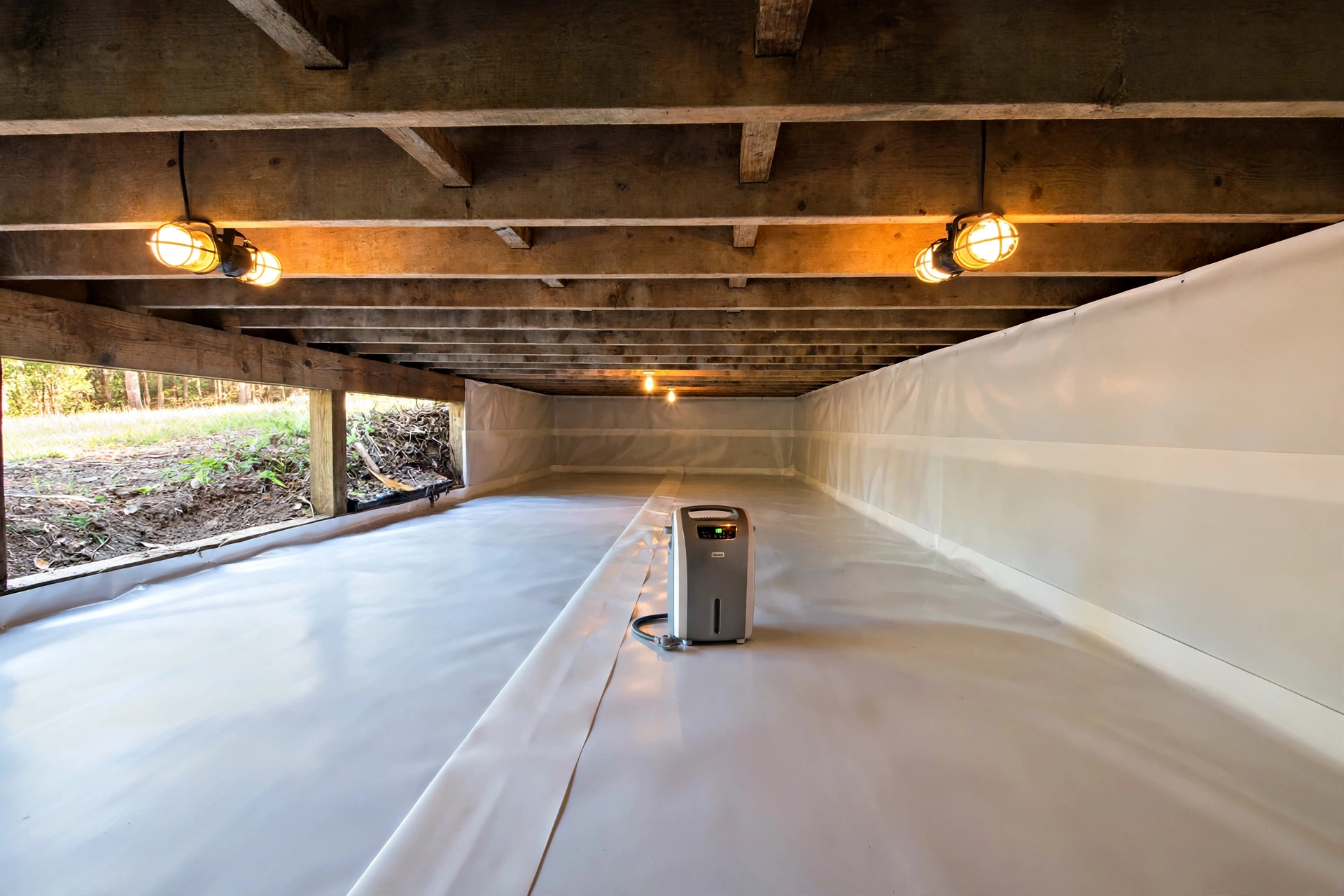
Vents sealed, 20-mil reinforced barrier on the floor (12-mil on walls), all seams overlapped and taped, sealed to the walls and piers.
Condition the air
Commercial dehumidifier installed with condensate drainage to daylight or a pump. Target: 45–55% relative humidity, year-round.
Verify & document
Final moisture readings, photos of the finished system, and your warranty paperwork. Most jobs finish in 2–4 days.
See the Transformation
Drag the slider to compare a typical Hoover crawl space before and after our encapsulation system.
Common Questions
How much does crawl space encapsulation cost in Hoover, AL?
Most full encapsulation systems in the Hoover area cost $5,000–$15,000, with the midpoint around $8,000–$10,000 for an average-size home in average condition.
The range is wide because scope varies enormously: a clean, dry 1,000 sq ft crawl space needing only barrier and vent sealing sits at the low end, while a wet 2,000+ sq ft space needing drainage, mold remediation, and a dehumidifier lands at the high end. Labor is typically 50–70% of the total. See the full itemized cost breakdown →
Is crawl space encapsulation worth it in Alabama?
For most Hoover homes with moisture issues: yes. It stops mold growth, protects floor framing from rot, cuts HVAC costs ~15%, and removes a major home-inspection flag at resale.
The math is straightforward — a $8,000 system protecting a $400,000 home's foundation and floor structure, while cutting energy bills and eliminating musty air (up to half your first-floor air comes from the crawl space via the stack effect). Where it's not worth it: a dry crawl space with no moisture history. We'll tell you that straight if that's what we find.
How long does encapsulation last?
A properly installed system lasts 15–25 years. The vapor barrier itself can last 25+ years; the dehumidifier and sump pump are mechanical and typically need replacement every 10–15 years.
What kills systems early: standing water that was never drained (barrier floats and tears), cheap thin liners, and unsealed seams. That's why we do drainage first and use 20-mil reinforced barrier on floors.
Will encapsulation get rid of the musty smell in my house?
Yes — if the crawl space is the source. Roughly 40–50% of the air on your first floor originates in the crawl space (the stack effect), so musty crawl space air becomes musty house air.
Once the space is sealed, dried, and any mold remediated, the odor source is gone. Most homeowners notice the difference within days. If the smell persists after encapsulation, the source is elsewhere (HVAC, plumbing leak, attic) — and we'll help you figure that out rather than sell you something you don't need.
Do I need a dehumidifier too, or is the vapor barrier enough?
In Hoover: you need the dehumidifier. A vapor barrier blocks ground moisture, but Alabama's humid air still infiltrates — only active dehumidification holds relative humidity under 60% year-round.
Barrier-only jobs in our climate tend to disappoint: the ground stays dry but humidity still feeds mold on joists. The dehumidifier is what makes the system actually work. How we size them →
Get Your Free Inspection
Tell us about your crawl space and we'll schedule a free inspection — with photos of everything we find and an itemized quote. No pressure, no obligation.
- Photos of everything we find under your house
- Wood-moisture readings, not guesses
- Itemized quote — you see every line
- Honest answer if you don't need us
Prefer to talk? (205) 555-0100