Crawl Space Encapsulation in Vestavia Hills, AL
Vestavia Hills sits on the ridge of Shades Mountain, and that slope changes everything about crawl space moisture. Water runs downhill — toward foundations, into crawl spaces, and through hillside seepage that flat-lot homes never see. We design encapsulation systems for hillside lots, not generic flat ground.
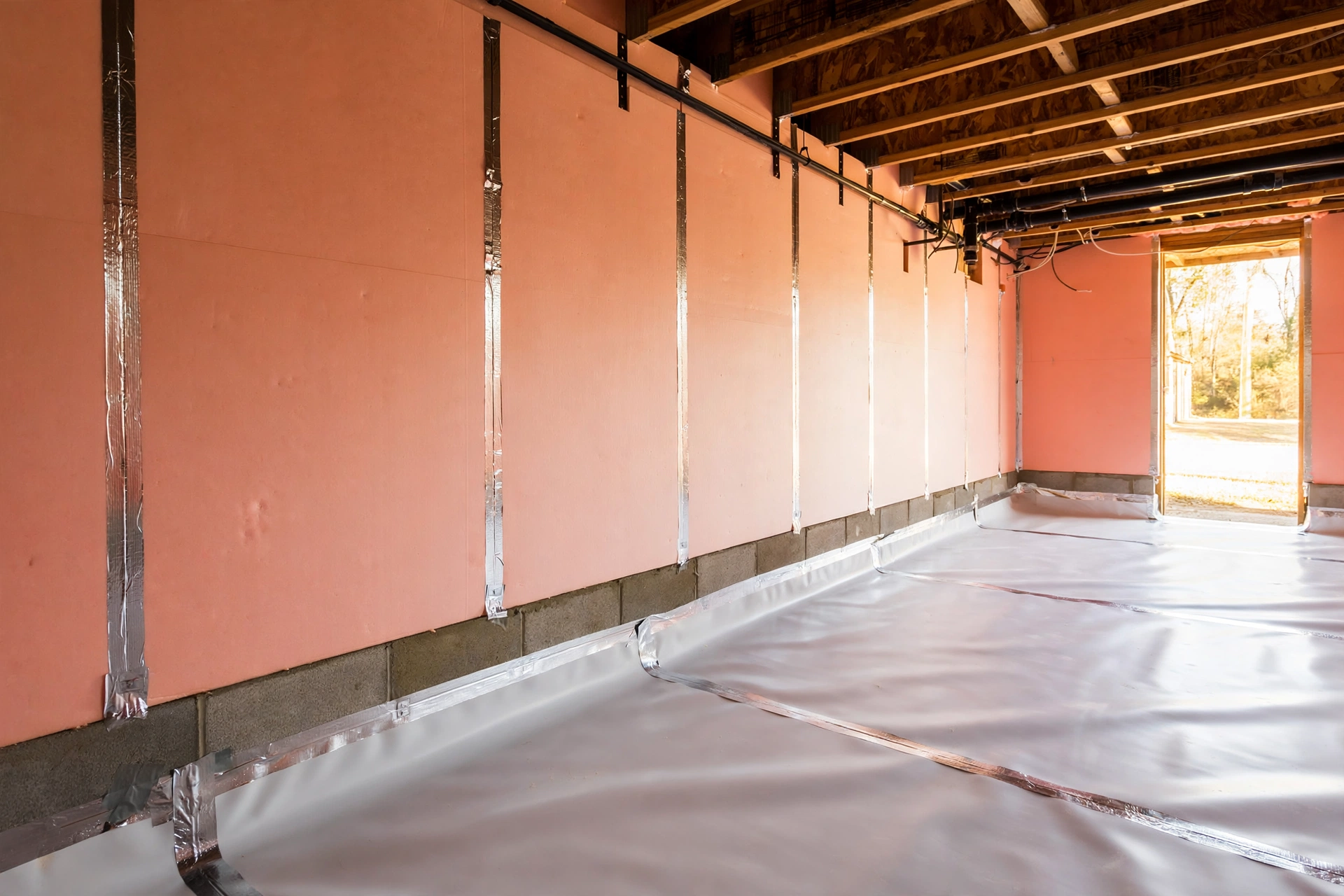
Hillside Lots, Downhill Water
Vestavia Hills is built on terrain, and terrain moves water. The neighborhoods climbing Shades Mountain — from the older sections near the ridge to the 1970s–1990s subdivisions carved into the slopes — share one defining trait: grade. When it rains on a hillside lot, water doesn't politely soak in. It runs downhill, and your foundation is what's standing in the way.
This creates a moisture pattern that flat-lot crawl spaces in Hoover don't have. On the uphill side of the house, hydrostatic pressure pushes groundwater against the foundation wall with every heavy rain. On the downhill side, water that entered the crawl space pools where the floor slopes — and crawl space floors on graded lots are rarely level. Add Alabama's red clay, which sheds water rather than absorbing it, and a Vestavia hillside home can take on more water in one spring storm than a flat-lot home sees in a season.
Hillside seepage: the problem nobody warns you about
Here's what surprises Vestavia homeowners: water can enter a crawl space through the uphill foundation wall even when the yard looks fine. Subsurface flow — water moving through the soil itself, following the slope — finds every crack, every porous mortar joint, every spot where the original waterproofing has failed. The crawl space stays damp between rains, not just during them. If your uphill-side framing shows more staining than the rest, that's seepage, not a leak, and it needs a different fix than a vapor barrier alone.
Retaining walls and drainage: connected systems
Many Vestavia lots have retaining walls managing the grade, and those walls are part of your moisture story. A retaining wall without proper drainage behind it becomes a dam — holding water against the uphill side of your property and redirecting it toward the house. When we inspect Vestavia crawl spaces, we walk the whole lot: wall drainage, gutter discharge points, and the grade around the foundation. Encapsulation that ignores the lot's drainage is a liner over a problem. We fix the water path first, then seal.
Questions Vestavia Hills Homeowners Ask Us
My crawl space is only wet on the uphill side. Is that normal?
On a hillside lot, yes — and it tells us exactly what's happening: subsurface water flowing downhill is pressing against your uphill foundation wall. That's a drainage problem first, an encapsulation problem second.
One-sided wetness is the signature of hillside seepage. The fix starts outside and at the wall: interior drainage on the uphill side, sometimes a curtain drain in the yard, and confirming gutters discharge away from the slope. Once the water path is managed, encapsulation seals and dries the space for good. Doing the liner without the drainage just gives the water a new surface to sit on.
Do I need a sump pump if my lot slopes away from the house?
Maybe not — slope-away grade is the best drainage there is. But many Vestavia lots slope toward the house on one side and away on the other, and the crawl space collects whatever the uphill side delivers.
We evaluate each side of the foundation independently. If the uphill side brings water and the crawl space floor can't shed it, an interior drain to a sump basin on the low side is the reliable answer — even on a lot that "drains well" overall. The sump handles what the slope delivers; the encapsulation handles everything else.
My home was built in the 1980s on a graded lot. What's likely under there?
Likely a builder-grade vapor barrier that's partially failed, moisture staining concentrated on the uphill side, and framing that's been cycling hillside moisture for decades.
The 1970s–1990s Vestavia builds typically got thin unsealed barriers — adequate for flat lots, marginal for slopes. Forty years of hillside seepage usually means the uphill joists and sill show the most wear. Our inspection maps moisture by wall so you can see the pattern yourself, then we scope the fix to match: drainage where the hill pushes, full encapsulation everywhere.
Will encapsulation stop water from coming through my foundation wall?
The wall liner manages moisture that reaches the interior — but active water intrusion through the wall needs drainage first. We don't ask a vapor barrier to do a drain's job.
Here's the honest sequence: if water is actively entering through the uphill wall, we install interior drainage to capture and redirect it, then encapsulate over a dry space. The 12-mil wall liner we install is sealed and durable, but it's a moisture manager, not a dam. Anyone who tells you a liner alone stops hillside water pressure is selling you a future problem.
What Encapsulation Costs in Vestavia Hills
Vestavia Hills jobs typically land between $5,000–$14,000. Hillside drainage is the variable that moves the number:
| Factor | How it affects Vestavia Hills pricing |
|---|---|
| Uphill drainage | Interior French drain on the uphill wall, curtain drains in the yard where needed — the hillside line item flat-lot homes don't have |
| Sump system | Basin and pump on the low side of the crawl space; battery backup recommended where storms knock out power on the ridge |
| Wall liner scope | Uphill walls often need the full 12-mil sealed liner plus drainage matting; downhill walls may need less |
A Vestavia home with moderate uphill seepage might land $8,000–$11,000 including drainage; one needing extensive exterior grading work plus full encapsulation can reach $12,000–$14,000. See how we itemize every line of a Vestavia quote.
What to Expect on a Vestavia Hills Job
Vestavia jobs start with water management, not liners. We walk the lot to trace how the slope delivers water, install interior drainage on the uphill side (and exterior curtain drains where the grade demands it), set the sump on the low side, then encapsulate the full space — 20-mil floor barrier, sealed 12-mil wall liner, closed vents, commercial dehumidifier. The drainage is sized for hillside flow, not flat-lot assumptions. Most jobs run 3–5 days.
- Lot-wide water-path assessment before any work begins
- Uphill interior drainage — sized for slope-driven flow
- Sump basin on the low side with battery backup option
- Full encapsulation only after the water path is managed
Vestavia Hills Encapsulation FAQs
Can you encapsulate a crawl space on a steep slope?
Yes — slope doesn't prevent encapsulation, it just changes the drainage design. The liner and seal work the same; the water management gets sized for the hill.
We've worked crawl spaces with significant floor pitch. The barrier gets stepped and sealed to follow the grade, drainage runs to the low point, and the sump goes where the water naturally collects. Steeper lots sometimes need the access enlarged for equipment — we handle that as part of the job.
My retaining wall is failing. Is that related to my crawl space moisture?
Often, yes — a failing retaining wall and a wet crawl space can share the same cause: unmanaged hillside water. Fixing one without assessing the other is half a job.
If the wall is holding back saturated soil with no drainage, that water is also pressing toward your foundation. We'll tell you honestly whether the wall needs its own contractor or whether our drainage scope covers it. We don't do structural wall rebuilds, and we'll say so.
Do hillside homes need dehumidifiers more than flat-lot homes?
The dehumidifier does the same job either way — but hillside crawl spaces tend to stay damper between rains, so the unit works harder and sizing matters more.
We size by square footage and measured conditions, not rules of thumb. On Vestavia lots with active seepage history, we lean toward the higher-capacity end of the range and confirm condensate drainage can handle continuous operation.
How do I know if my moisture is seepage versus a plumbing leak?
Pattern and timing: seepage follows rain and concentrates on the uphill side; plumbing leaks are steady regardless of weather and localize near pipes.
During inspection we check both — moisture meter readings across the space, visual tracing to the source, and questions about when you notice it. If it's plumbing, we'll point you to a plumber first; sealing over an active leak helps nobody.
Get Your Free Vestavia Hills Inspection
Hillside moisture has a pattern, and once you've seen it as many times as we have, you can read it like a map. We'll show you exactly where your water comes from and exactly what stops it.
- Full lot walk — grade, walls, gutters, drainage
- Moisture mapped by wall, with photos
- Drainage and encapsulation itemized separately
- Honest answer if the fix is simpler than you feared
Prefer to talk? (205) 208-7286